
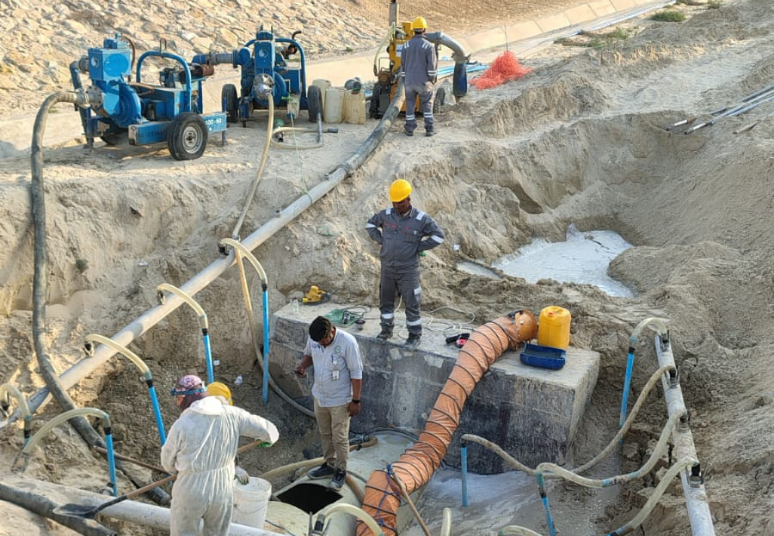
A dewatering supplier in Saudi Arabia provides specialized pumps, systems, and services to remove groundwater from excavation sites and construction zones. These suppliers offer wellpoint systems, deep well dewatering, sump pumps, and emergency pump rental to maintain dry, stable, and safe working conditions on construction sites across the Kingdom.
Before You Break Ground, Understand This: Why Dewatering Matters in Saudi Arabia
If you’re planning to excavate in Saudi Arabia whether for a high-rise foundation in Riyadh, a coastal infrastructure project in Jeddah, or an industrial facility in Jubail, groundwater control isn’t optional. It’s the difference between a project that finishes on time and one that gets stuck in the mud, literally.
Construction activity across the Kingdom is surging. With Vision 2030 driving hundreds of gigaprojects including NEOM, the Red Sea Project, and Diriyah Gate, the need for a reliable dewatering supplier in Saudi Arabia has never been greater. Yet many contractors still treat groundwater management as an afterthought and pay a steep price for it.
This guide walks you through everything you need to know about dewatering: what it is, why you need it before digging starts, which systems work best in Saudi conditions, and how to find dewatering pump companies in Saudi Arabia that can actually deliver results.
What Is Dewatering and Why Does Ground Water Control in Saudi Arabia Require Special Attention?
Dewatering, in the context of construction, is the controlled removal of groundwater and surface water from an excavation pit, trench, foundation area, or underground tunnel. When workers dig below the natural water table, groundwater seeps in. Without intervention, that water makes the site dangerous and structurally unstable.
Ground water control in Saudi Arabia presents unique challenges that differ from many other parts of the world:
- Coastal aquifer pressure in Jeddah, Dammam, and the Eastern Province means groundwater rises quickly during deep excavations.
- Sandy and loose soil layers throughout much of the Peninsula become highly unstable when saturated, leading to trench collapse.
- Extreme heat and arid surface conditions can be deceptive, underground water is often far more abundant than surface conditions suggest.
- Industrial and petrochemical zones in Jubail and Yanbu often sit above heavily pressurized aquifers.
These factors mean you need a dewatering supplier in Saudi Arabia with local geological expertise, not just a company that ships generic pumps.
Key Statistics: The Dewatering and Construction Market in Saudi Arabia
Metric | Data |
Saudi Arabia construction market size (2024) | USD 72.6 billion |
Projected construction market size (2030) | USD 96+ billion |
Vision 2030 infrastructure investment commitment | USD 1 trillion+ |
Percentage of construction failures linked to poor water management | ~30% |
Annual growth rate of pump rental market in GCC | ~6.5% CAGR (2024–2030) |
Average groundwater depth in Eastern Province (below surface) | 3–12 meters depending on location |
Sources: Saudi Vision 2030 Program, Grand View Research, Global Market Insights, Saudi Geological Survey
Why Every Project Needs Underground Water Control in Saudi Arabia Before Excavation
Soil Stability and Foundation Integrity
The most immediate risk of uncontrolled groundwater is soil liquefaction. When sandy or silty soil becomes fully saturated, it loses its bearing capacity. Excavation walls can collapse without warning, and foundations poured in wet conditions will crack, settle unevenly, or fail entirely.
Proper underground water control in Saudi Arabia uses dewatering systems to lower the water table around the excavation perimeter before digging begins, not after water has already entered the pit.
Worker and Equipment Safety
A flooded excavation site is an OSHA violation and a human tragedy waiting to happen. Slippery surfaces, unstable trench walls, and submerged equipment create hazardous conditions. Most serious site accidents in the excavation phase are water-related. Engaging dewatering pump suppliers in Saudi Arabia well in advance of breaking ground protects your crew and your liability exposure.
Project Timeline and Cost Control
Water-related delays are among the most expensive problems on a construction site. Pumping out an already-flooded pit is far more costly and time-consuming than preventive dewatering. Renting or purchasing the right systems through dewatering pump companies in Saudi Arabia keeps your critical path intact.
Protecting Equipment and Infrastructure
Heavy excavators, cranes, and compactors suffer serious damage from water exposure and mud. Concrete mixing systems produce substandard mixes in wet conditions. A single day of flooding can cause equipment downtime lasting weeks and dewatering systems pay for themselves many times over by preventing such losses.
Types of Dewatering Systems Available from Suppliers in Saudi Arabia
Not all dewatering methods are equal, and the right choice depends on your site’s soil type, water table depth, excavation volume, and project duration. Here’s what leading dewatering pump suppliers in Saudi Arabia typically offer:
Wellpoint Dewatering Systems
Wellpoint systems consist of a series of small-diameter suction pipes (wellpoints) installed around an excavation, connected to a central vacuum pump. They’re ideal for:
- Shallow excavations (up to 6 metres)
- Pipeline trenching and utility installations
- Basement construction in sandy or silty soils
- Road and pavement projects
Best for: Medium-scale civil and infrastructure projects in sandy coastal areas.
Deep Well Dewatering Systems
Deep well systems use large-diameter bored wells fitted with submersible pumps. They’re designed for:
- Excavations deeper than 6 metres
- High-rise building foundations
- Industrial plant construction
- Tunnelling operations and underpasses
This is the most common method used by dewatering pump companies in Saudi Arabia for Vision 2030 megaprojects. Water is drawn from well below the excavation level, ensuring stable dry conditions even at great depth.
Best for: Large-scale construction in Riyadh, Jubail, and NEOM project zones.
Sump Pumping
Sump pumping collects water that has already entered the excavation into a low-point pit, then removes it with submersible or centrifugal pumps. It’s a reactive rather than preventive approach, but it remains useful for:
- Minor water ingress management
- Rainwater removal
- Supplementing other dewatering methods
Best for: Temporary use or as a backup to primary dewatering systems.
Eductor (Jet Pump) Systems
Eductor systems use high-pressure water circulation to create suction in low-permeability silts and clays conditions where standard vacuum pumps underperform. They’re complex to set up but highly effective in specific geological conditions found in parts of the Western Region.
Best for: Silty and clay-heavy soil zones, often found in reclaimed coastal land.
How to Choose the Right Dewatering Pump Suppliers in Saudi Arabia
Selecting the wrong supplier is a risk most project managers can’t afford. Here are the factors that matter:
1. Local Geological Experience
A competent dewatering supplier in Saudi Arabia should be able to review your site’s geotechnical report and recommend a system before you sign any contract. If they can’t explain why one method suits your soil profile better than another, keep looking.
2. Equipment Fleet and Capacity
Ask about pump capacity (in litres per minute or cubic metres per hour), the age of the fleet, and whether they stock backup units. Pump failure mid-project is a nightmare, redundancy matters.
3. Emergency Response Capability
Flooding emergencies don’t wait for business hours. The best dewatering pump companies in Saudi Arabia offer 24/7 emergency deployment, particularly for large projects where a delay of even a few hours can cost millions.
4. Coverage Across the Kingdom
Your supplier should be able to service projects in Riyadh, Jeddah, Dammam, Jubail, Yanbu, NEOM, and other active zones. Local logistics make a significant difference in response time.
5. Rental vs. Purchase Options
For most contractors, dewatering pump rental in Saudi Arabia is the smarter financial choice. You avoid the capital cost of purchase, eliminate maintenance responsibilities, and can scale pump capacity up or down as the project progresses.
Dewatering Pump Rental vs. Purchase: Which Is Right for Your Project?
Factor | Rental | Purchase |
Upfront cost | Low | High |
Maintenance responsibility | Supplier’s | Yours |
Equipment upgrade access | Automatic | Manual/costly |
Best suited for | Project-duration use | Long-term, multi-site operators |
Emergency backup | Usually included | Self-arranged |
Flexibility to scale | High | Limited |
For most construction companies running project-based work in Saudi Arabia, rental through established dewatering pump suppliers delivers better ROI. Purchase makes sense only for contractors running continuous, high-volume operations at multiple sites.
Industries That Rely on Dewatering Services in Saudi Arabia
Dewatering isn’t limited to building construction. The full list of sectors using dewatering pumps in Saudi Arabia includes:
- Construction and real estate – foundations, basements, underground parking
- Oil and gas – pipeline laying, refinery expansion, subsea infrastructure
- Mining and quarrying – pit dewatering in the Hejaz Mountain zones
- Municipal water and sewage – pipe replacement and lift station construction
- Road and highway construction – underpasses, bridge footings, culverts
- Industrial plants – petrochemical facility expansions in Jubail and Yanbu
- Marine and coastal construction – seawalls, jetties, port infrastructure
- Tunnelling – metro systems, road tunnels, utility corridors
Warning Signs Your Construction Site Needs Immediate Dewatering
If you notice any of the following on an active excavation site, contact a dewatering supplier immediately:
- Standing water in excavation pits even small pools indicate groundwater ingress
- Wet, spongy, or muddy soil at or near the excavation base
- Slowed excavation progress due to soft or saturated ground
- Visible seepage through trench walls or cut faces
- Settlement or cracking in adjacent structures or paving
- Equipment sinking or losing traction in muddy conditions
- Foul-smelling water rising in the excavation may indicate contaminant migration
Ignoring these signs risks worker safety, structural integrity, and project timelines simultaneously.
Key Takeaways
- Ground water control in Saudi Arabia is a technical necessity for any excavation project, not a luxury service.
- Choosing the right dewatering supplier in Saudi Arabia early in the planning stage prevents costly delays, accidents, and structural failures.
- The most commonly used systems are wellpoint dewatering (shallow) and deep well dewatering (large-scale), with sump pumping and eductor systems for specific conditions.
- Dewatering pump rental in Saudi Arabia is typically more cost-effective than purchase for project-based contractors.
- Always evaluate suppliers on local geological expertise, fleet capacity, emergency response, and Kingdom-wide coverage.
- Vision 2030 megaprojects have dramatically increased demand for qualified dewatering pump companies in Saudi Arabia, so engaging reputable suppliers early is critical.
Conclusion
Saudi Arabia’s construction boom shows no signs of slowing. From NEOM to the Red Sea, from Riyadh’s new urban districts to Jubail’s expanding industrial base, excavation work is happening everywhere and so is the groundwater that threatens it. Working with the right dewatering supplier in Saudi Arabia is one of the most important decisions a project manager or contractor can make before breaking ground.
Whether you need wellpoint systems for a shallow pipeline trench, a full deep well installation for a 30-storey tower foundation, or emergency pump hire because your site flooded overnight, there are qualified dewatering pump companies in Saudi Arabia with the equipment and expertise to help. Don’t wait until water is flowing into your excavation. Plan your ground water control in Saudi Arabia before the first shovel goes in the ground because dewatering is always cheaper before a flood than after one.
Frequently Added Questions
A dewatering supplier provides specialized pumps, piping systems, installation expertise, and ongoing operational support to remove groundwater from construction sites and excavations. Services typically include wellpoint systems, deep well dewatering, sump pumping, pump rental, emergency response, and technical consultation on groundwater management strategy.
Wellpoint systems are effective to approximately 5–6 metres below surface. Deep well dewatering systems can lower groundwater levels 15–30 metres or more, depending on pump capacity and soil permeability. For very deep excavations, multi-stage systems are used.
Wellpoint dewatering uses shallow suction wells connected to a vacuum pump and works best for depths up to 6 metres in sandy or silty soils. Deep well dewatering uses larger-diameter bored wells with submersible pumps and is designed for deeper excavations and higher water volumes.
For most contractors, renting dewatering pumps in Saudi Arabia is more cost-effective. Rental eliminates capital cost, maintenance, storage, and upgrade expenses. It also provides access to larger or more specialised equipment on demand. Purchase makes sense only for companies running continuous multi-site operations.
Leading dewatering pump suppliers in Saudi Arabia typically offer emergency deployment within hours for critical situations. Standard planned installations are usually completed within one to three days depending on system complexity and site location.
Groundwater problems in Saudi Arabia are caused by high coastal aquifer pressure (especially in Jeddah and the Eastern Province), sandy and permeable soil profiles, seasonal rainfall events, proximity to wadis or drainage basins, and construction in previously waterlogged industrial zones.
Yes. Discharging dewatered groundwater into municipal drainage systems or natural watercourses typically requires approval from local municipality authorities and, in industrial zones, the Royal Commission for Jubail and Yanbu (RCJY). A reputable dewatering supplier in Saudi Arabia will advise you on the relevant permits and compliant discharge methods.
The highest demand is in Riyadh (urban mega-development), Jeddah (coastal and urban projects), Dammam and Al Khobar (Eastern Province industrial and residential), Jubail (petrochemical expansion), Yanbu (industrial city), and NEOM (gigaproject excavation at unprecedented scale).
Yes, specialised dewatering systems can be combined with treatment units to manage contaminated groundwater on oil and gas or petrochemical sites. The water is pumped, treated to local standards, and then safely discharged or reused. Always engage a supplier experienced in industrial dewatering for such projects.
It depends on excavation depth, soil permeability, and project phase. Systems may run from a few weeks for shallow pipeline work to 12–24 months for deep foundation projects or tunnelling. The system typically operates until the structure is watertight and backfill is complete.