
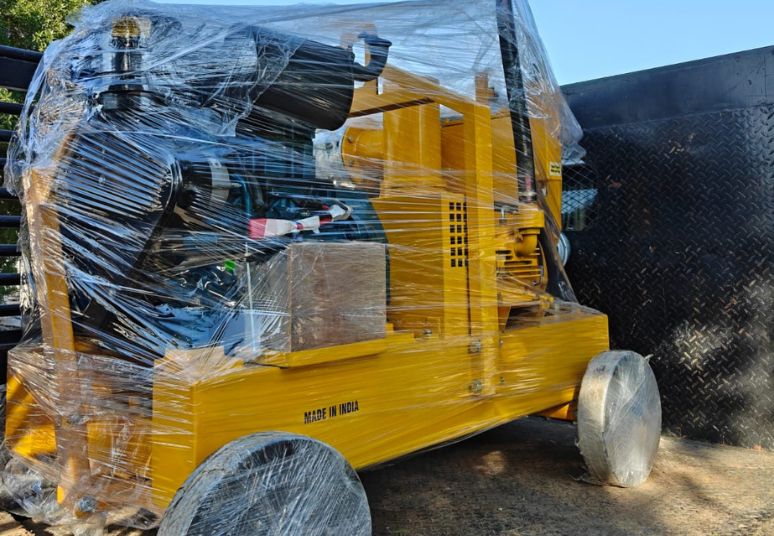
Most dewatering mistakes aren’t equipment failures, they’re decision failures made before the pump ever arrived on site. A sump pump ordered for a job that needed a wellpoint system. A single-stage wellpoint installed on an excavation that needed multiple stages. A standard submersible pump sent to a site with sandy, solids-heavy groundwater that clogged it within days.
This guide works through the decision in the order that actually matters on site: soil, depth, water volume, timeline, and budget so you can land on the right system before mobilization, not after the pit starts refilling.
Step 1: Start With Your Soil
Soil permeability determines how fast groundwater will move into your excavation, and that alone rules out or rules in entire categories of dewatering system.
| Soil Type | Water Behavior | Systems That Typically Work |
| Sand / gravel (high permeability) | Water moves quickly, refills fast | Wellpoint, deep well |
| Silty sand (moderate permeability) | Moderate inflow, manageable with staged systems | Wellpoint (multi-stage if deep), sump pumping for shallow cases |
| Silt / clay (low permeability) | Water moves slowly but is hard to extract with suction-based methods | Eductor (ejector) systems |
| Mixed/layered soil profiles | Behavior varies by depth | Often requires a combined approach site assessment strongly recommended |
If you don’t know your soil profile with confidence, this is the point to get a site assessment rather than guess soil type is the single biggest factor separating a straightforward job from an expensive mismatch.
Step 2: Match the System to Your Required Depth
| Required Drawdown | Recommended System | Notes |
| Shallow just removing standing/surface water | Sump pumping | Doesn’t lower the water table; only removes water already in the pit |
| Up to ~5–6 metres (15–18 ft) | Single-stage wellpoint | Works on suction, so this is close to the practical single-stage limit |
| Beyond ~6 metres | Multi-stage wellpoint or deep well system | Wellpoints are staged progressively deeper; deep wells use submersible pumps not limited by suction |
| 100+ ft (~30 m) drawdown from top of excavation | Eductor (ejector) system | Purpose-built for depths and soil types where suction-based systems can’t keep up |
Step 3: Estimate Water Volume and Inflow Rate
High-permeability soils at depth generate the highest sustained inflow, and this is where system capacity, not just drawdown depth, becomes the limiting factor.
- Low, occasional inflow → sump pumping is often sufficient.
- Moderate, steady inflow → wellpoint systems handle this well across most soil types.
- High-volume, continuous inflow (common in high-permeability soils near large excavations) → deep well systems, since submersible pumps in individually drilled wells scale better to high flow than a suction-based wellpoint header.
- Low volume but hard-to-extract water (fine-grained soils) → eductor systems, which are designed precisely for this combination.
Step 4: Factor In Project Duration and Site Constraints
| Situation | What It Usually Means for System Choice |
| Short job (days) | Sump pumping or basic wellpoint hire minimal setup time matters most |
| Medium duration (weeks) | Wellpoint systems balance setup effort against performance well |
| Long duration (months) | Deep well systems often justify their higher setup cost through lower per-day operating complexity over time |
| Site near existing structures | Careful drawdown control matters uncontrolled dewatering near foundations can cause settlement; a supplier who models this before installation is important |
| Regulated discharge zone | Confirm any system’s discharge meets local permitting requirements before mobilization, regardless of which method is chosen |
Step 5: Weigh Budget Against Risk
This is where the decision guide connects back to the classic hire-vs-buy and supplier-vs-rental questions:
- Lowest upfront cost, higher mismatch risk: renting a standard pump without a site assessment, based on assumptions about soil and depth.
- Slightly higher upfront cost, lower mismatch risk: a supplier-led assessment that specifies the system based on actual site conditions before equipment is chosen.
- Highest upfront cost, lowest ongoing risk: a fully engineered, monitored system (common for deep well and eductor installations) with accountability for performance built into the contract.
The “cheapest” option on paper is only cheap if it actually works for your site. A mismatched pump that clogs, underperforms, or needs mid-project replacement almost always costs more in downtime than the extra cost of getting the assessment right the first time.
Quick-Reference Decision Matrix
| Your Situation | Likely Best System |
| Shallow excavation, sandy soil, short job | Sump pumping |
| Medium-depth trench or foundation, most soil types | Wellpoint system |
| Large excavation, high-permeability soil, high water volume, long duration | Deep well system |
| Deep excavation, silt/clay soil, suction-based methods underperforming | Eductor (ejector) system |
| Unclear soil/water conditions, previous dewatering attempts failed | Site assessment before any equipment is ordered |
Common Decision Mistakes Worth Avoiding
- Ordering by depth alone, ignoring soil type. The same depth requirement can call for a completely different system depending on whether the soil is sand or clay.
- Choosing the cheapest day rate without checking solids content. A standard pump in solids-heavy groundwater often fails faster than the money saved on the rental rate.
- Underestimating setup and mobilization time for deep well or eductor systems, then discovering the timeline doesn’t fit the project schedule.
- Not confirming discharge permitting requirements until water is already being pumped off-site.
- Skipping a site assessment on a site with a known history of dewatering problems repeating the same mismatched approach rarely fixes an underperforming system.
Final Word
The right dewatering system is a function of five things working together: soil, depth, water volume, duration, and budget-versus-risk tolerance. Skipping any one of them is usually how a project ends up with the wrong pump on site. Work through the steps above before mobilization, and the equipment decision becomes far less of a guess.
Still not sure which system fits your project? Saeedcon’s engineering team can assess your soil and groundwater conditions and recommend the right dewatering system sump pumping, wellpoint, deep well, or eductor with equipment available across Riyadh, Jeddah, Dammam, Al Khobar, and Jubail. Get in touch for a same-day site consultation
Frequently Added Questions
Start with soil type, then match required drawdown depth, expected water volume, project duration, and budget against the decision factors above. If soil and groundwater conditions are uncertain, a site assessment before ordering equipment is the safest starting point.
Yes, it’s common on complex sites to use sump pumping for surface water alongside a wellpoint or deep well system for groundwater control, or to transition from wellpoints to a deep well system as an excavation deepens.
Focusing on depth alone while ignoring soil permeability and solids content, which are often the actual reasons a system underperforms once installed.
For straightforward, well-understood jobs, often not necessary. For anything with uncertain groundwater conditions, deep excavation, or a history of prior dewatering issues, an assessment typically costs far less than the downtime caused by a mismatched system.
Sump pumping can be running within hours, wellpoint systems typically take a day or two, and deep well or eductor systems which require drilling generally take several days depending on the number of wells needed.
A dewatering supplier that offers a site and soil assessment before recommending equipment is generally a safer starting point than ordering a rental pump based on assumptions alone.