
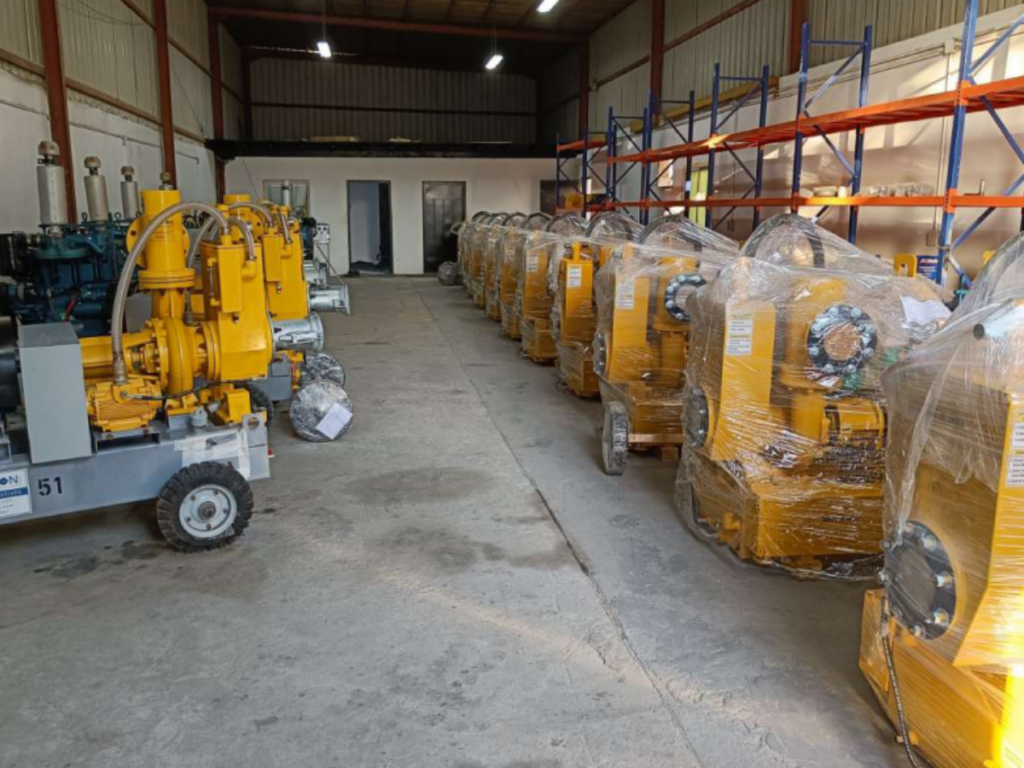
Construction sites, mining operations, and infrastructure projects across Saudi Arabia all share one recurring challenge: unwanted water. Whether it’s a flooded excavation pit in Riyadh, seepage in a Jeddah basement, or groundwater intrusion on a NEOM job site, getting water out fast and reliably is critical to keeping projects on schedule. That’s where dewatering pumps come in.
This guide covers everything you need to know about dewatering pumps in the Saudi market, the types available, what they cost, where they’re used, and how to choose (or rent) the right one for your project.
What Is a Dewatering Pump?
A dewatering pump is a heavy-duty pump designed to remove standing or accumulated water, often dirty, silty, or debris-laden from a work area. Unlike standard water pumps, dewatering pumps are built to handle solids, grit, and abrasive slurry without clogging or failing, making them essential for construction, mining, tunneling, and flood-response work.
Types of Dewatering Pumps
Choosing the right pump starts with understanding the main categories available in Saudi Arabia:
1. Submersible Dewatering Pumps
These pumps sit directly in the water and push it out through a discharge hose. They’re compact, quiet, and ideal for confined spaces like trenches, basements, and sumps. Solids-handling models can pass debris up to several centimeters in diameter without jamming.
2. Diesel Dewatering Pumps
For sites without reliable grid power remote desert locations, large excavation zones, or 24/7 operations diesel dewatering pumps are the standard choice across Saudi Arabia. They’re self-priming, fuel-efficient, and built for continuous run-time in high-heat, high-dust environments. Many Saudi rental fleets stock diesel units specifically because they can run unattended overnight on large civil and infrastructure projects.
3. Electric Dewatering Pumps
Where power is available, electric pumps offer lower noise, no exhaust emissions, and lower running costs. They’re common on urban construction sites and indoor/basement dewatering work.
4. Automatic Dewatering Pumps
An automatic dewatering pump uses a float switch to turn itself on when water reaches a set level and off once the area is clear. This is especially useful for unattended sump pits, stormwater collection points, and sites where water levels fluctuate unpredictably reducing manual monitoring and preventing dry-running damage.
5. High-Capacity Dewatering Pumps
Large-scale projects, major infrastructure works, mining dewatering, flood control, and big excavation pits need high-capacity dewatering pumps capable of moving thousands of liters per minute. These units typically run on diesel engines, feature larger discharge diameters (6″, 8″, 10″+), and are engineered for continuous heavy-duty operation.
Dewatering Pump Price in Saudi Arabia
Pricing for dewatering pumps in Saudi Arabia varies widely based on pump type, capacity, brand, and whether you’re buying new, buying used, or renting. As a general guide:
Pump Type | Typical Price Range (Purchase) |
Small submersible (1–2″) | Entry-level to mid-range |
Automatic float-switch pumps | Mid-range |
Electric dewatering pumps (3–4″) | Mid to upper-mid range |
Diesel dewatering pumps (4–6″) | Upper-mid to high range |
High-capacity diesel units (8″+) | Premium/industrial pricing |
Exact prices depend heavily on supplier, brand reputation (well-known European and Japanese brands typically cost more than regional or Chinese-manufactured alternatives), warranty terms, and whether spare parts and after-sales support are included. Always request a formal quote from suppliers based on your specific flow-rate (m³/hr) and head (lift) requirements, since these specifications drive more than size alone.
Tip: Don’t compare pumps on sticker price alone factor in fuel/power consumption, expected maintenance costs, and downtime risk. A cheaper pump that fails mid-project can cost far more than a reliable higher-priced unit.
Buy vs. Rent: Dewatering Pump Hire in Saudi Arabia
Not every project justifies a purchase. Dewatering pump hire has become a popular option across Saudi Arabia’s construction and contracting sectors, especially for short-term or one-off dewatering needs.
When renting makes sense:
- Short-term projects (a few days to a few months)
- Emergency flood or seepage response
- Testing pump suitability before committing to a purchase
- Avoiding maintenance, storage, and depreciation costs
When buying makes sense:
- Ongoing or recurring dewatering needs
- Long-term projects (multi-year infrastructure works)
- Companies with in-house maintenance capability
If you’re searching for “dewatering pump rental near me,” most major Saudi cities Riyadh, Jeddah, Dammam, Khobar, and Mecca have local equipment rental companies stocking submersible, diesel, and high-capacity units. When comparing rental providers, check:
- Availability of 24/7 emergency callout service
- Delivery and pickup logistics
- Fuel/hose/fitting inclusions
- Technician support if the pump malfunctions on-site
Common Applications of Dewatering Pumps in Saudi Arabia
Given the Kingdom’s mix of desert construction, coastal development, and large-scale giga-projects, dewatering pumps are used across a wide range of scenarios:
- Construction excavation – clearing groundwater and rainwater from foundation pits and trenches
- Basement and underground dewatering – protecting below-grade structures during construction
- Mining and quarrying – removing water from pits and shafts
- Coastal and marine projects – managing seawater intrusion in Red Sea and Gulf coastal developments
- Flash flood response – Saudi Arabia’s occasional but intense flash flooding events require rapid-deployment pumps
- Agricultural drainage – clearing waterlogged fields
- Municipal infrastructure – stormwater and sewer line maintenance
How to Choose a Dewatering Pump
Selecting the right pump comes down to matching equipment to your site conditions. Key factors to evaluate:
- Flow rate needed (m³/hr or liters/second) – how much water must be moved, and how fast
- Total head (lift height) – vertical and friction distance the water must travel
- Solids-handling capacity – the maximum particle/debris size the pump can pass without clogging
- Power source availability – diesel for remote/off-grid sites, electric where power is accessible
- Water characteristics – clean water, silty/muddy water, or water with high solid content each require different pump designs
- Portability and site access – how easily the pump can be moved, positioned, and connected to hoses
- Run-time requirements – pumps needed for continuous 24/7 operation should prioritize durability and fuel efficiency (diesel units excel here)
- Automation needs – sites with fluctuating or unattended water levels benefit from automatic float-switch models
A simple rule of thumb: undersizing a pump leads to slow, inefficient dewatering and project delays, while oversizing wastes fuel/energy and increases rental or purchase costs unnecessarily. When in doubt, consult with your supplier and provide exact site measurements (pit depth, expected inflow rate, distance to discharge point) for a proper recommendation.
Final Thoughts
Whether you’re managing a small residential excavation or a giga-project dewatering operation, Saudi Arabia’s market offers a full range of pump types submersible, diesel, electric, automatic, and high-capacity to match almost any job requirement. The right choice comes down to balancing flow rate, power source, solids-handling needs, and budget, while deciding whether purchasing or renting best fits your project timeline.
Before committing, get quotes from multiple suppliers, confirm technical specifications against your site conditions, and for critical projects always have a backup pump or rapid-response rental option on standby.
Frequently Added Questions
Dewatering pumps are used to remove groundwater, rainwater, seepage, and accumulated water from construction excavations, trenches, basements, foundations, mining sites, tunnels, infrastructure projects, and industrial sites across Saudi Arabia.
Common types include submersible dewatering pumps, diesel dewatering pumps, electric dewatering pumps, automatic dewatering pumps, self-priming pumps, and high-capacity dewatering pumps. The right type depends on flow rate, head, water conditions, solids content, power availability, and project duration.
Dewatering pump prices in Saudi Arabia vary according to pump capacity, type, brand, head, flow rate, specifications, and whether the equipment is new or used. Rental and purchase prices can differ significantly, so obtaining a project-specific quotation is recommended.
Renting is often more economical for short-term projects, emergency water removal, temporary excavations, and projects where equipment ownership is unnecessary. Buying can make more sense for contractors with recurring or long-term dewatering requirements.
The best pump depends on site conditions. Submersible pumps are suitable for many trenches and sumps, while diesel self-priming pumps are useful for remote sites without reliable electricity. Large excavations may require high-capacity pumps or engineered dewatering systems.
Yes. Diesel dewatering pumps are widely suited to remote construction and infrastructure sites because they do not depend on grid electricity and can provide continuous operation when correctly selected, installed, maintained, and protected from extreme site conditions.
Important information includes the expected water inflow, required flow rate, pumping distance, vertical lift or total head, discharge pipe diameter, water quality, solids/debris size, available power source, operating hours, and site accessibility.
Yes. Dewatering pump rental services are available in major Saudi markets, including Riyadh, Jeddah, Dammam, Khobar, Jubail, and other industrial and construction areas. Availability depends on pump type, capacity, project location, and rental duration.
A submersible pump operates while placed directly in the water and generally requires electrical power. A diesel dewatering pump is typically installed outside the water and uses a diesel engine, making it useful for remote locations and applications requiring high-capacity or continuous pumping.
Pump capacity should be determined from the expected water inflow and required pumping rate while accounting for total dynamic head, pipe friction, discharge distance, solids content, and operating conditions. A professional pump supplier can help calculate the required flow and head from your site measurements.