
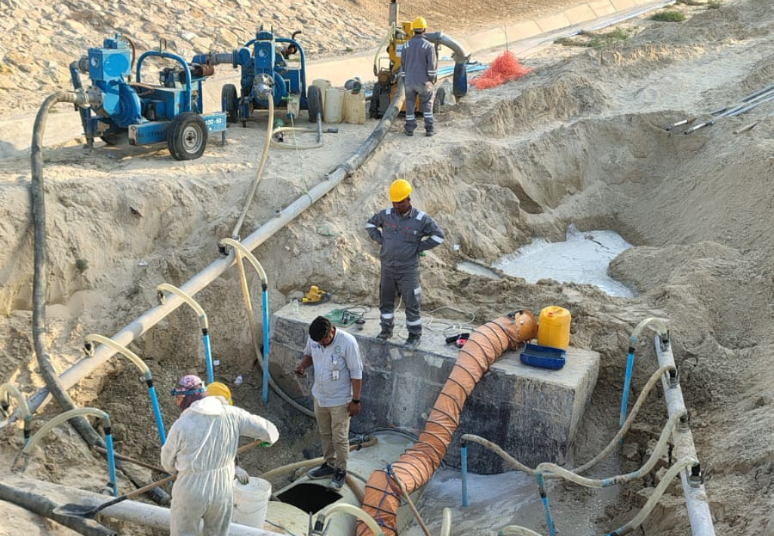
A wellpoint dewatering system is one of the most practical methods for controlling groundwater around construction excavations. It is commonly used for foundations, trenches, basements, pipelines, utility installations, and other projects where groundwater can interfere with excavation and construction.
Unlike simple sump pumping, a wellpoint system is designed to lower the groundwater level before it enters the excavation. This makes it particularly useful when contractors need controlled and continuous temporary groundwater control.
In Saudi Arabia, wellpoint dewatering is widely applicable to construction and infrastructure projects where groundwater, seepage, or water accumulation can affect productivity and site conditions.
Wellpoint System vs. Sump Pumping
Feature | Wellpoint System | Sump Pumping |
Main purpose | Lower groundwater level | Remove accumulated water |
Installation | Multiple wellpoints | Sump/pit |
Groundwater control | Excellent for suitable soils | More localized |
Typical application | Excavations and trenches | Surface water and localized seepage |
Continuous groundwater inflow | Suitable | May be less effective |
Site preparation | Requires planned installation | Relatively simple |
What Is a Wellpoint Dewatering System?
A wellpoint dewatering system consists of a series of small-diameter wells or wellpoints installed into the ground around an excavation. These wellpoints are connected through flexible pipes or risers to a common header pipe, which is connected to a dewatering pump.
When the pump operates, groundwater is drawn through the wellpoints and discharged away from the excavation.
A typical system includes:
- Wellpoint pipes and screens
- Riser pipes
- Header pipe
- Suction hoses
- Wellpoint pump
- Valves and fittings
- Discharge pipelines
- Monitoring points where required
The system works continuously to create a controlled drawdown of the groundwater table.
Wellpoint Dewatering for Shallow Excavations
Shallow excavation dewatering is one of the most common applications for wellpoint systems.
When excavation extends below the natural groundwater level, water can continuously seep through surrounding soil. This can make excavation unstable and create muddy working conditions.
A wellpoint system can lower groundwater before it reaches the excavation, allowing workers and equipment to operate in a more manageable environment.
For example, consider a foundation excavation where the groundwater table is above the planned excavation base. Installing wellpoints around the perimeter can gradually lower the groundwater level and reduce water entering the work area.
Wellpoint Installation: What Factors Matter?
Correct wellpoint installation is essential for achieving effective groundwater control.
Several factors should be considered before installation:
Soil Conditions
Sand and gravel generally allow groundwater to move relatively easily toward wellpoints. Clay and very low-permeability soils can behave differently and may require another dewatering approach.
Wellpoint Spacing
Wellpoint spacing depends on groundwater conditions, soil permeability, excavation geometry, and required drawdown.
Pump Capacity
The pump must provide sufficient vacuum and flow capacity for the number of wellpoints and expected groundwater inflow.
Excavation Depth
Wellpoint systems are particularly effective for shallow and moderate excavation depths. Deeper excavations may require staged wellpoint systems or alternative methods such as deep wells.
Discharge Requirements
The pumped water needs to be discharged safely and in accordance with applicable project and environmental requirements.
Advantages of a Wellpoint Dewatering System
A properly designed wellpoint dewatering system can provide several benefits:
Effective groundwater drawdown: Multiple wellpoints distribute pumping around the excavation.
Improved working conditions: Lower groundwater levels can make excavation and construction activities easier to manage.
Flexible installation: Systems can be configured around different excavation shapes and sizes.
Continuous pumping: Wellpoint systems can operate for extended construction periods when properly designed and maintained.
Suitable for temporary projects: They can be installed for the duration of construction and removed after the excavation is completed.
Reduced water accumulation: Controlling groundwater before it reaches the excavation can reduce reliance on emergency pumping.
Temporary Groundwater Control for Construction
Construction projects often require temporary groundwater control only during excavation and below-ground construction.
Once foundations, underground structures, drainage systems, or pipelines are completed and the site reaches a suitable stage, the dewatering system can be shut down and removed.
This makes wellpoint systems particularly useful for projects where permanent groundwater management is not required.
However, dewatering should be carefully planned. Excessive or uncontrolled pumping can potentially affect surrounding soils, neighboring structures, utilities, or groundwater conditions. Monitoring and professional system design are therefore important.
Wellpoint Dewatering in Saudi Arabia
Construction activity across Saudi Arabia includes residential developments, commercial buildings, industrial facilities, infrastructure, utility networks, and large-scale development projects. Many of these projects involve excavation below groundwater levels.
A properly designed wellpoint dewatering system can help contractors manage groundwater during foundation excavation, pipeline construction, utility installation, and other below-ground works.
The system should be selected based on actual site conditions rather than relying on a standard configuration. Soil investigation, groundwater levels, excavation dimensions, required drawdown, pumping capacity, and discharge arrangements all influence system design.
Conclusion
A wellpoint dewatering system provides an effective way to lower groundwater and maintain manageable conditions around suitable construction excavations. Through strategically installed wellpoints, header pipes, and pumping equipment, groundwater can be controlled before it significantly interferes with excavation activities.
For shallow excavation, dewatering, pipeline trenches, foundations, utilities, and temporary construction works, wellpoint systems can provide flexible and continuous temporary groundwater control when properly designed and installed.
For projects in Saudi Arabia, selecting the right wellpoint spacing, pumping capacity, installation method, and discharge arrangement is essential for achieving reliable groundwater management and keeping construction activities moving efficiently.
Frequently Added Questions:
A wellpoint dewatering system is a groundwater-control method that uses multiple screened wellpoints connected to a header pipe and pump to lower the groundwater level around a construction excavation.
It is commonly used for shallow to medium-depth excavations, foundation works, basements, pipeline trenches, utility installations, and construction projects where groundwater needs to be temporarily controlled.
Wellpoints are installed around the excavation and connected to a header pipe. A pump creates suction, drawing groundwater through the wellpoints and discharging it away from the excavation.
Wellpoint installation generally involves placing screened wellpoints around the excavation, connecting them to riser pipes and a header pipe, and connecting the system to a suitable dewatering pump.
Yes. Wellpoint systems are commonly used for shallow excavation dewatering, particularly where groundwater continuously enters foundations, trenches, basements, and utility excavations.
Benefits include groundwater drawdown, improved excavation conditions, reduced water accumulation, better site accessibility, continuous pumping, and flexible temporary installation.
Yes. Wellpoint systems can help control groundwater around pipeline trenches, making excavation, pipe installation, jointing, bedding, and backfilling easier to manage.
No. System performance depends on soil permeability and groundwater conditions. Highly permeable soils generally respond better, while low-permeability soils may require alternative dewatering methods.
Wellpoint systems primarily lower the groundwater level before water enters the excavation, while sump pumping generally removes water that has already accumulated inside the excavation.
Yes. A wellpoint system is often installed as temporary groundwater control during excavation and underground construction and can be removed once the project reaches a suitable stage.