
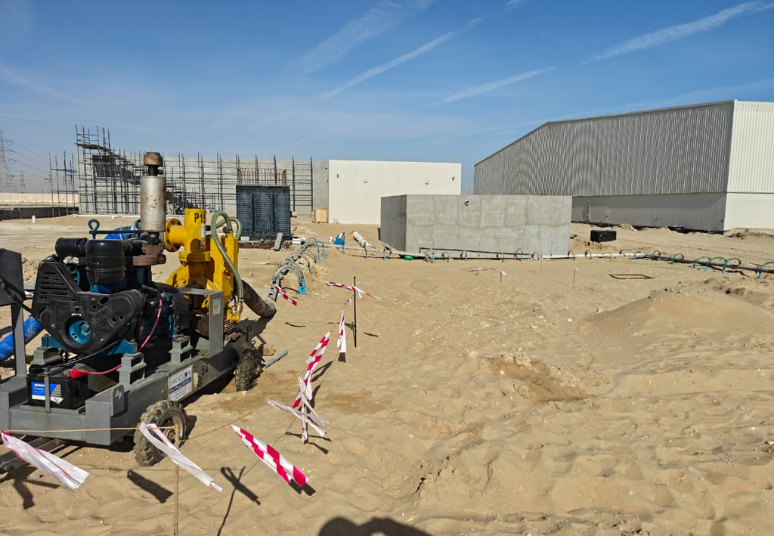
In the arid and diverse landscape of Saudi Arabia, managing groundwater and surface water effectively is crucial to ensuring safe and efficient construction projects. Dewatering, the process of removing water from a construction site, plays a vital role in stabilizing soil, maintaining project timelines, and avoiding costly delays. In this article, we will explore various dewatering systems, including deep well dewatering, soil water control, and self-priming pumps, focusing on their applications in Saudi Arabia’s unique environmental conditions.
What Is Dewatering?
Dewatering refers to the process of removing water from an area to allow construction work to proceed safely and effectively. In regions like Saudi Arabia, where groundwater levels can fluctuate, dewatering becomes a crucial step in creating a stable work environment. The water removed from the site can either be pumped to nearby water bodies or stored for later treatment, depending on the regulations and environmental impact.
Why Is Dewatering Important in Saudi Arabia?
In Saudi Arabia, dewatering is especially important due to the country’s varying geography. From desert landscapes to coastal areas, the presence of underground water or surface water can hinder construction progress. Dewatering ensures that:
- Stability of the Excavation Site: Dewatering keeps the excavation site dry and free of muddy conditions, which can make the soil unstable.
- Prevents Delays: Construction can be delayed if water accumulates in the excavation site, leading to additional costs.
- Regulatory Compliance: Construction sites need to follow stringent environmental regulations to prevent contamination of water sources.
Types of Dewatering Systems for Construction Projects in Saudi Arabia
In Saudi Arabia, several dewatering techniques are commonly used, each suited for different soil types, excavation depths, and water removal needs. The following systems are optimal for construction sites in the region:
1. Deep Well Dewatering System
A deep well dewatering system is ideal for large-scale construction projects in Saudi Arabia. This method involves drilling deep wells equipped with submersible pumps to lower the water table and remove groundwater.
- Best for High-Permeability Soils: This system works efficiently in sandy and porous soils, common in desert and coastal regions of Saudi Arabia.
- Handling Large Volumes of Water: Deep well systems are perfect for large excavation areas with significant groundwater presence.
- Cost Considerations: While this system is more expensive, it is highly effective for large-scale projects, such as commercial buildings and infrastructure projects.
2. Self-Priming Pumps
Self-priming pumps are versatile and commonly used in smaller construction projects in Saudi Arabia. These pumps can draw water from shallow wells and are easy to maintain and operate.
- Versatile Use: Ideal for both shallow excavations and areas with moderate groundwater levels.
- Cost-Effective: Self-priming pumps are a cost-effective dewatering solution for smaller sites.
- Easy Installation and Maintenance: Their simplicity makes them easy to install and maintain, which is essential for remote or desert locations.
3. Soil Water Control
In areas where controlling water within the soil is necessary, a combination of soil treatment and dewatering systems can be employed. Techniques such as soil stabilization or drainage systems are used to control water flow into the excavation site.
- Prevent Water Infiltration: Helps in preventing water from seeping into the construction site from surrounding areas.
- Use in Combination with Other Systems: Often used alongside other dewatering techniques, such as wellpoint or sump pumping, to ensure effective water control.
4. Underground Water Control
Managing underground water sources is critical, especially in construction sites with shallow aquifers. Dewatering methods like wellpoint dewatering or eductor wells can be effective in controlling underground water.
- Eductor Wells: These are particularly useful for deep excavations in low-permeability soils. They can handle moderate water levels and are suitable for areas where water control is needed at greater depths.
- Wellpoint Systems: Ideal for shallow aquifers, this system is widely used in construction sites near urban areas or coastal regions.
Case Study: Successful Dewatering in Saudi Arabia’s Coastal Construction
In a recent large-scale infrastructure project in the coastal city of Jeddah, a deep well dewatering system was successfully employed to manage groundwater. The project involved building an underground parking structure for a commercial complex. The groundwater level was high due to the proximity to the Red Sea, and traditional methods like sump pumps proved insufficient.
By installing a series of deep wells with submersible pumps, the construction team was able to lower the water table and create a dry excavation area. This allowed the project to proceed on schedule, despite the challenging groundwater conditions.
Dewatering in Saudi Arabia: Key Considerations
When choosing the right dewatering system for your construction site, consider the following factors:
- Soil Type: In Saudi Arabia, soil permeability varies significantly from region to region. Coastal areas tend to have sandy, high-permeability soils, while desert regions may have clay-rich soils with low permeability.
- Excavation Depth: Shallow excavations benefit from methods like self-priming pumps and wellpoint systems, while deep excavations require deep well dewatering.
- Budget: Deep well systems tend to be more expensive but are necessary for large-scale projects, while self-priming pumps and sump pumps are more budget-friendly for smaller projects.
- Water Volume: Projects with significant water accumulation will need high-capacity systems like deep wells or eductor wells.
Real Data on Dewatering Systems
| System Type | Cost Estimate (SAR) | Best For | Key Benefits |
| Deep Well Dewatering | 150,000 – 250,000 | Large-scale projects with high groundwater levels | High efficiency, large water volume handling |
| Self-Priming Pumps | 20,000 – 60,000 | Small to medium projects with moderate groundwater | Easy installation, cost-effective |
| Wellpoint Dewatering | 50,000 – 120,000 | Shallow excavations, urban areas | Effective for shallow aquifers |
| Eductor Wells | 80,000 – 150,000 | Deep excavations with moderate water levels | Low maintenance, deep excavation support |
Recent Search Trends in Saudi Arabia
Here are some of the top search queries related to dewatering solutions in Saudi Arabia:
- “Dewatering system in construction in Saudi Arabia“ – 45% increase in search volume in the last 6 months.
- “Deep well dewatering system in Saudi Arabia” – 32% increase in searches for large-scale projects.
- “Soil water control in Saudi Arabia“ – 25% rise in searches as the region experiences varied rainfall patterns.
- “Underground water control in Saudi Arabia” – 18% rise in demand for techniques to manage groundwater.
- “Self-priming pumps in Saudi Arabia” – 22% increase in small to medium project inquiries.
Conclusion
Dewatering plays a vital role in ensuring safe and effective construction in Saudi Arabia. Whether it’s deep well dewatering, self-priming pumps, or soil water control, selecting the right dewatering method based on your project’s needs and environmental factors is crucial for success. By understanding the unique challenges and available solutions, construction projects in Saudi Arabia can be completed on time, within budget, and with minimal environmental impact.
Frequently Added Questions
There are several methods, including wellpoint systems, deep well systems, and sump pumps, each suited for different site conditions and project sizes.
Dewatering helps prevent water from accumulating at construction sites, which could cause flooding, hinder excavation, and damage materials or equipment.
Deep well dewatering uses wells installed around the construction site to pump water out of the ground, lowering the water table and keeping the site dry.
Yes, dewatering techniques are applicable to both urban and rural construction sites, though the method chosen may vary based on the site’s water table and location.
While dewatering is essential for construction, it’s important to manage the discharge of water properly to avoid environmental harm, such as soil erosion or contamination.