
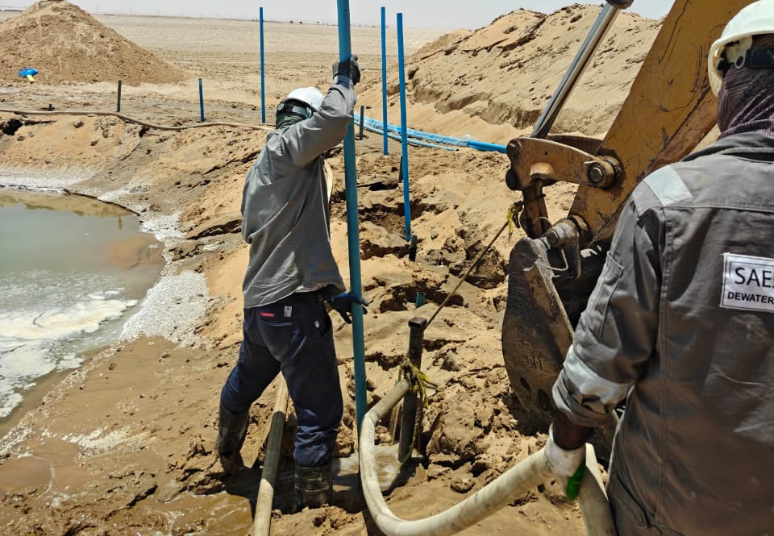
Oil and gas construction projects involve some of the most demanding excavation, foundation, pipeline, and infrastructure requirements in the industrial sector. From refinery construction and tank foundations to pipeline corridors and underground utilities, uncontrolled groundwater can create delays, safety concerns, and difficult working conditions. Oil and gas dewatering services help contractors control groundwater, remove accumulated water, and maintain stable work areas throughout construction.
A well-planned dewatering strategy is particularly important in Saudi Arabia, where major energy, refinery, petrochemical, and infrastructure developments often involve large-scale excavations and complex subsurface conditions.
Choosing the Right Dewatering Pump
|
Project Factor |
Impact on Pump Selection |
|
Water inflow |
Determines required flow capacity |
|
Pumping head |
Determines pressure/head requirements |
|
Excavation depth |
Influences pumping configuration |
|
Water quality |
Affects pump and material selection |
|
Solids content |
Determines suitable pump type |
|
Power availability |
Influences electric or diesel equipment |
|
Project duration |
Helps determine rental or permanent systems |
|
Discharge distance |
Affects pipework and pump requirements |
What Are Oil and Gas Dewatering Services?
Oil and gas dewatering services involve the planning, installation, operation, and monitoring of pumping systems designed to remove groundwater or accumulated water from oil and gas construction sites.
Depending on project conditions, dewatering may involve:
- Deep well dewatering systems
- Wellpoint dewatering
- Submersible pumps
- Self-priming pumps
- Diesel dewatering pumps
- Sump pumping
- High-capacity pumping systems
- Temporary drainage systems
- Groundwater monitoring and control
The objective is simple: keep excavations and work areas sufficiently dry and stable so construction activities can continue safely and efficiently.
Why Is Dewatering Important for Oil & Gas Projects?
Oil and gas facilities commonly require deep foundations, underground pipelines, process units, storage tanks, utility trenches, drainage networks, and other below-ground structures.
Groundwater entering these areas can create several problems.
1. Excavation Instability
Water can weaken soil around excavations and contribute to sloughing, erosion, or difficult excavation conditions. Controlling groundwater helps maintain more manageable excavation conditions.
2. Construction Delays
Standing water can prevent foundation preparation, concrete work, trench installation, welding, and other construction activities from progressing as planned.
3. Foundation and Structural Concerns
Refinery units, storage tanks, compressor stations, and other heavy industrial structures require properly prepared foundations. Excess water can complicate excavation and subgrade preparation.
4. Safety Risks
Uncontrolled water around deep excavations and trenches can create access, stability, and equipment-related hazards. Effective groundwater control forms an important part of overall site management.
5. Equipment and Material Protection
Construction equipment, electrical components, materials, and temporary facilities can be affected by uncontrolled water. Dewatering reduces unnecessary exposure to water.
Industrial Groundwater Management for Energy Projects
Industrial groundwater management goes beyond simply installing a pump. It requires understanding how groundwater moves through the site’s soil and determining how much water needs to be removed.
Before selecting a dewatering system, contractors and specialists may consider:
- Groundwater table elevation
- Excavation depth
- Soil permeability
- Aquifer characteristics
- Required drawdown
- Pumping rate
- Excavation size
- Duration of construction
- Discharge requirements
- Nearby structures and utilities
This information helps determine whether a project needs sump pumping, wellpoints, deep wells, or a combination of systems.
Refinery Construction Dewatering
Refinery construction dewatering presents unique challenges because refinery projects typically contain extensive foundations, process equipment areas, pipe racks, underground utilities, storage tanks, and drainage infrastructure.
Large excavations may encounter groundwater at different depths and flow rates. A properly engineered system can help maintain suitable conditions while contractors perform:
- Foundation excavation
- Tank foundation preparation
- Underground utility installation
- Pipeline trenching
- Concrete works
- Structural foundation construction
- Drainage installation
- Equipment foundation preparation
For large refinery projects, continuous monitoring is often important because groundwater conditions can change as excavation progresses.
Pipeline Dewatering Solutions
Pipeline dewatering can be required during pipeline trench construction when groundwater enters the excavation. Water accumulation can make trenching, bedding, pipe installation, jointing, and backfilling more difficult.
Depending on site conditions, contractors may use:
- Sump pumps
- Submersible pumps
- Wellpoint systems
- Self-priming pumps
- Temporary drainage networks
- High-capacity diesel pumps
The system should be sized according to expected inflow rather than simply choosing the largest available pump. Oversized or poorly configured equipment can increase operating costs without necessarily improving site performance.
Benefits of Professional Oil and Gas Dewatering
Using an experienced dewatering provider can provide several project benefits:
Better groundwater control: Pumping systems can be designed around actual site conditions.
Reduced construction interruptions: Proper water management helps contractors maintain productive work areas.
Improved excavation conditions: Lowering groundwater can make below-ground construction easier to manage.
Flexible equipment: Projects can use different pump types according to changing construction requirements.
Operational support: Professional teams can monitor pumps, troubleshoot issues, and adjust the system as site conditions change.
Dewatering for Oil & Gas Projects in Saudi Arabia
Saudi Arabia’s oil, gas, refinery, petrochemical, and industrial sectors continue to involve major construction and infrastructure projects. These developments can include extensive excavation and underground construction where groundwater management becomes an important consideration.
For projects in industrial areas such as Jubail, Dammam, Yanbu, Riyadh, and other parts of the Kingdom, oil and gas dewatering services can support refinery construction, pipeline installation, tank foundations, utility networks, and other below-ground works.
The most effective approach is not necessarily one standard pumping method. Instead, the dewatering system should be engineered around the project’s groundwater conditions, excavation requirements, pumping capacity, and discharge strategy.
Conclusion
Reliable water control is a critical consideration in many oil and gas construction projects. From refinery foundations and storage tanks to pipeline trenches and underground utilities, uncontrolled groundwater can affect productivity, safety, and construction quality.
Professional oil and gas dewatering services provide a structured approach to groundwater control through appropriate pumping systems, monitoring, and site-specific planning. With the right combination of industrial groundwater management, refinery construction dewatering, and pipeline dewatering, contractors can maintain better-controlled work areas and keep demanding energy projects moving toward completion.
Frequently Added Questions:
Oil and gas dewatering services are specialized groundwater-control and water-removal services used during refinery, pipeline, petrochemical, energy, and related industrial construction projects.
Refinery construction often involves deep excavations, foundations, underground utilities, tanks, and process infrastructure. Dewatering helps control groundwater and accumulated water so these activities can proceed under more manageable site conditions.
Pipeline dewatering is the removal and control of groundwater or accumulated water from pipeline trenches and construction areas. It helps contractors perform trenching, pipe installation, jointing, and backfilling more effectively.
Depending on project requirements, systems may use submersible, self-priming, diesel, high-capacity, deep well, or wellpoint pumping systems.
Industrial groundwater management typically combines site investigation, groundwater monitoring, pumping equipment, wells or wellpoints, drainage, and controlled discharge to achieve the required groundwater level.