
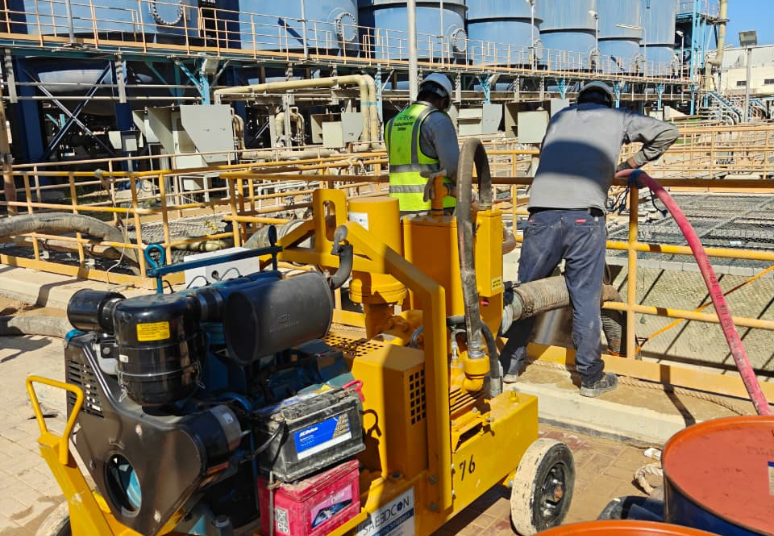
Factories and manufacturing plants often deal with groundwater, rainwater, process water, excavation seepage, and accumulated water around foundations or underground structures. Without effective water management, these conditions can damage equipment, weaken foundations, delay construction, and create serious operational challenges. Industrial dewatering solutions provide a practical way to remove unwanted water and maintain safe, dry working conditions.
For factories, warehouses, industrial facilities, and manufacturing plants, dewatering is not simply about pumping water away. It involves selecting the right pumping system, managing groundwater levels, controlling water flow, and maintaining reliable drainage throughout the project.
How to Choose Heavy Duty Pumping Solutions
| ||||||||||||||||||||
Industrial Pump Rental in Saudi Arabia
For temporary construction and industrial projects, industrial pump rental Saudi Arabia services can be a cost-effective alternative to purchasing equipment.
Pump rental allows contractors and facility operators to access suitable equipment without making a large upfront investment. Depending on project requirements, rental fleets may include diesel pumps, submersible pumps, self-priming pumps, and high-capacity dewatering systems.
Rental can be particularly useful for:
- Factory construction
- Manufacturing plant expansions
- Industrial excavation
- Emergency floodwater removal
- Pipeline and utility projects
- Infrastructure development
- Maintenance shutdowns
The key is to work with a supplier that can provide the appropriate pump capacity, accessories, installation support, monitoring, and technical assistance.
How Industrial Dewatering Improves Factory Construction
A reliable dewatering strategy can improve project efficiency in several ways.
First, it keeps excavations workable. Contractors can perform foundation, piling, concrete, and utility work in better-controlled conditions.
Second, it reduces water-related delays. Continuous pumping helps prevent groundwater from interrupting critical construction activities.
Third, it supports safer site operations. Controlling standing and flowing water reduces hazards around excavations and access routes.
Finally, it protects long-term infrastructure. Proper groundwater management during construction can help contractors establish stable conditions for foundations, underground structures, and utility installations.
Industrial Dewatering Solutions in Saudi Arabia
Saudi Arabia’s expanding industrial, manufacturing, infrastructure, and construction sectors create a strong need for reliable water management. Projects in industrial cities and development zones can encounter groundwater, stormwater, excavation seepage, and other water-related challenges.
A professional dewatering supplier can evaluate site conditions and recommend a combination of pumping equipment and groundwater-control techniques suited to the project.
For industrial facilities in areas such as Dammam, Jubail, Khobar, Riyadh, and other parts of Saudi Arabia, selecting appropriately sized dewatering equipment is especially important for maintaining construction schedules and operational continuity.
Conclusion
Effective industrial dewatering solutions are essential for factories and manufacturing plants where groundwater or accumulated water can affect construction, safety, equipment, and project schedules. From deep well systems and wellpoints to diesel and submersible pumps, the right solution depends on the site’s specific hydraulic and construction requirements.
For industrial projects in Saudi Arabia, working with an experienced dewatering provider can help ensure the right equipment, pumping capacity, groundwater-control strategy, and ongoing support are available when they are needed most.
Common Industrial Dewatering Systems
Different industrial projects require different approaches. Choosing the right system is essential for efficient groundwater management.
1. Deep Well Dewatering
Deep well systems are suitable for projects involving substantial groundwater levels and deeper excavations. Multiple wells are installed around or near the excavation, allowing groundwater to be lowered before or during construction.
This approach is particularly useful for:
- Factory foundations
- Underground structures
- Industrial basements
- Large excavation projects
- Infrastructure connected to manufacturing facilities
2. Wellpoint Dewatering
Wellpoint systems use a series of closely spaced wellpoints connected to a header pipe and pumping equipment. They are commonly used where groundwater must be controlled around relatively shallow or medium-depth excavations.
3. Submersible Pumping
Submersible pumps are positioned directly within sumps, pits, trenches, or excavated areas. They can provide a straightforward solution for removing accumulated water.
4. Self-Priming Pump Systems
Self-priming pumps are useful for applications where pumps need to handle water containing air or where frequent repositioning is required. They can be used for temporary industrial drainage and construction dewatering.
5. Diesel Dewatering Pumps
Where electrical power is limited or unavailable, diesel-powered pumps can provide dependable pumping capacity. They are especially useful for remote industrial construction projects and emergency water removal.
Why Do Factories and Manufacturing Plants Need Dewatering?
Industrial facilities frequently involve deep foundations, basements, utility trenches, underground tanks, pipelines, and large-scale excavations. Groundwater can enter these areas through soil layers and hydrostatic pressure.
Effective factory groundwater control helps prevent:
- Excavation flooding – Water can quickly accumulate in foundation and utility excavations.
- Foundation instability – Excess groundwater may soften soil and affect excavation stability.
- Construction delays – Contractors cannot safely continue many activities in waterlogged areas.
- Equipment damage – Electrical and mechanical equipment can be exposed to unwanted water.
- Concrete and foundation problems – Excess water can interfere with construction activities and site preparation.
- Safety hazards – Standing water increases slip, electrical, and access-related risks
A properly designed dewatering system keeps work areas manageable while construction progresses.
Frequently Added Questions:
Industrial dewatering solutions are systems and services used to remove groundwater, surface water, seepage, and accumulated water from industrial construction sites, factories, manufacturing plants, and underground structures.
The best pump depends on excavation depth, groundwater conditions, flow requirements, water quality, and available power. Submersible, self-priming, diesel, and high-capacity pumps may all be suitable depending on the application.
Yes. Industrial pump rental Saudi Arabia services can provide temporary pumping equipment for construction, excavation, factory expansion, emergency drainage, and other industrial applications.
Factory groundwater control may involve deep wells, wellpoints, sump pumping, drainage systems, or combinations of these methods to lower and manage groundwater around excavations and underground structures.