
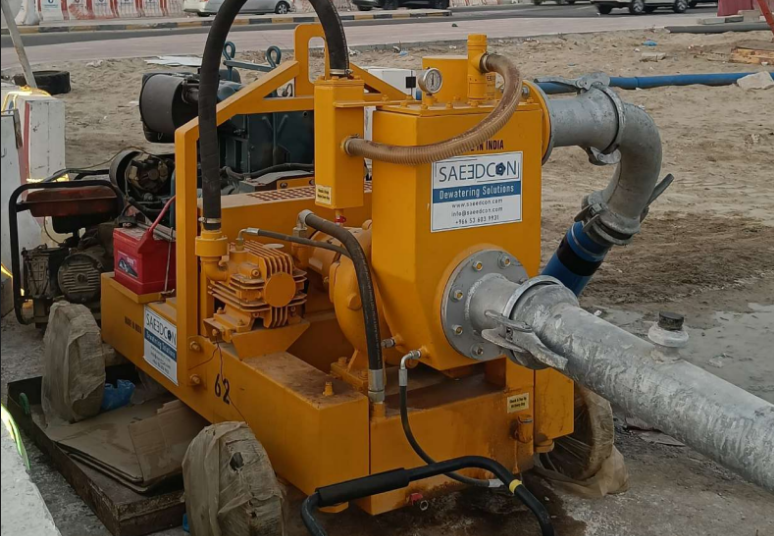
You set the pump up on Monday and it moved water like a champ. By Wednesday the pit is filling again, the discharge hose is barely trickling, and someone on site is asking whether the dewatering pump is dead. Nine times out of ten it isn’t. When dewatering pumps lose flow, the cause is usually something simple: air in the suction line, a clogged strainer, a kinked hose, or a pump working harder than it was sized for. This guide walks through the common causes in the order worth checking them, so you can fix the problem fast and keep the excavation dry.
Quick Answer: Why Is My Dewatering Pump Losing Flow?
A dewatering pump usually loses flow because of air leaking into the suction line, a blocked strainer, hose or impeller, cavitation from excessive suction lift, worn internal parts, or a system head higher than the pump was selected for. Check these in order before replacing anything.
What Does “Losing Flow” Actually Mean?
Not all flow loss looks the same, and the pattern tells you where to start.
- Sudden loss: output drops or stops within minutes. Think blockage, air, lost prime, or a power or fuel problem.
- Gradual loss: output slips over days or weeks. Think wear, partial clogging, silt build-up, or a pit that keeps getting deeper.
One more thing worth remembering: a pump doesn’t have a single flow rate. It has a flow rate at a given head. If the head goes up, flow goes down, even when nothing is broken. That’s why a pump can seem to “weaken” the moment the discharge line gets longer or the excavation goes deeper.
Why Dewatering Pumps Lose Flow: The Most Common Causes
1. Air Leaks on the Suction Side
Centrifugal pumps move water, not air. A loose clamp, a cracked suction hose, a tired gasket, or a worn shaft seal can let in just enough air to wreck performance.
- Signs: sputtering discharge, bubbles in the water, gurgling noise, repeated loss of prime.
- Fix: tighten every clamp, replace damaged hose and gaskets, and check the shaft seal.
2. Clogged Strainer, Suction Hose, or Foot Valve
Sand, silt, weeds, rags, and plastic bags love to collect at the intake.
- Signs: flow fades gradually and the pit level stops dropping.
- Fix: clean the strainer, flush the hose, and lift the intake off the pit floor on a platform or float so it isn’t sucking up sediment.
3. Cavitation
Cavitation happens when pressure at the pump inlet drops so low that tiny vapour bubbles form and then collapse against the impeller. In plain terms, the pump is being starved.
- Common causes: suction lift that’s too high, a restricted inlet, a long or narrow suction hose, or a pump running faster than the setup allows.
- Signs: a crackling sound like gravel in the casing, vibration, unstable flow, and pitting on the impeller over time.
- Fix: move the pump closer to the water, shorten or enlarge the suction line, and clear the inlet. As a rule, the net positive suction head (NPSH) available at your site has to exceed what the pump requires.
4. Blocked or Worn Impeller
Debris can jam the vanes. In sandy or silty ground, abrasive particles also wear the impeller and the wear plate, which opens up clearances and lets water slip back inside the pump.
- Signs: gradual flow decline, unusual noise, changes in motor load.
- Fix: open the pump, clear any blockage, and replace a worn impeller or wear plate. Reset clearances to the manufacturer’s specification.
5. Loss of Prime (Self-Priming Pumps)
A self-priming pump needs water held in its casing to restart on its own. If that water drains away, the pump runs but delivers nothing.
- Common causes: a worn seal, an air leak on the suction line, or the casing not being refilled after draining.
- Fix: refill the casing, repair leaks, and replace worn seals. Never let the pump run dry for long, because that damages the seal quickly.
6. Discharge-Side Restrictions
Water has to get out as well as in. A kinked or crushed hose, a half-closed valve, a stuck check valve, an undersized pipe, or a long run over a berm all raise the head the pump works against.
- Signs: a strong start that fades, hot hoses, or a pump that sounds like it’s straining.
- Fix: straighten the line, open valves, test the check valve, and upsize or shorten the discharge run where you can.
7. Wrong Rotation, Low Speed, or Power Problems
- Three-phase electric pumps: reversed rotation moves water badly. A qualified electrician can swap two phases.
- Engine-driven pumps: a dirty fuel filter or a sticky governor can drop engine speed, and flow drops with it.
- Submersible pumps on long cables: voltage drop starves the motor.
8. Low Water Level and Vortexing
When the water falls close to the intake, the pump can pull in air through a swirling vortex, and flow collapses. Lower the pump, adjust the float switch, or give the sump enough depth.
9. The Site Has Changed
Sometimes nothing is wrong with the pump at all. The pit got deeper, the discharge line got longer, or rain pushed groundwater inflow up. The pump is now working at a different point on its curve than the one it was selected for. The fix is to recalculate the head and flow, then add a pump or move to a larger one.
Troubleshooting Table: Symptom, Likely Cause, First Fix
| Symptom | Likely cause | First fix |
| Sputtering discharge, bubbles in water | Air leak on suction side | Tighten clamps, replace gaskets, check shaft seal |
| Flow fades slowly over days | Clogged strainer or worn impeller | Clean strainer, inspect impeller and wear plate |
| Crackling noise, vibration | Cavitation | Reduce suction lift, clear inlet, shorten suction line |
| Pump runs but nothing comes out | Lost prime or reversed rotation | Refill casing, verify rotation |
| Strong start, then flow fades | Kinked hose, closed valve, rising head | Check discharge line, valves, and hose length |
| Low flow with a hot or tripping motor | Low voltage, overload, or drag | Check voltage, cable length, and impeller condition |
Source: general pump troubleshooting practice. Always follow the manufacturer’s manual for your exact model.
A Simple Step-by-Step Troubleshooting Routine
Safety first: isolate the power, stop the engine, and release pressure before you touch anything.
- Check power or fuel, and confirm the pump is turning the right way at the right speed.
- Check the water level and where the intake sits.
- Inspect the strainer and suction inlet for debris.
- Look over the suction hose and every joint for air leaks.
- Walk the discharge line for kinks, closed valves, and a stuck check valve.
- Listen for cavitation, rattling, or vibration.
- Read your gauges. Compare suction vacuum and discharge pressure with the pump curve.
- Open the pump and inspect the impeller, wear plate, and seals.
By step 4 or 5, most problems have shown themselves.
How to Prevent Flow Loss Before It Starts
- Check strainers and intakes at the start of every shift.
- Walk the hose line for kinks, crushing, and loose clamps.
- Choose a solids-handling pump when the water carries sand or silt.
- Record flow and pressure when the pump is new, so you can spot decline early.
- Keep spare seals, gaskets, and a standby pump on site.
- Re-check head and flow whenever the excavation or discharge route changes.
Repair, Replace, or Rent?
If a pump is badly worn, or the job has outgrown it, you have three routes.
- Repair: worth it when the casing and shaft are sound and wear is limited to seals, impellers, and wear plates.
- Replace: sensible for long-term work. See our dewatering pump sales options.
- Rent: the quickest way to keep the site dry while the original pump is being serviced, or when you need extra capacity for a short stretch. Take a look at dewatering pump rental.
Saeedcon, based in Jubail, provides dewatering services, pump rental and sales, and 24/7 support and maintenance for construction, mining, and industrial projects. If you’re also planning wider groundwater control, read about our wellpoint and deep-well systems.
Key Takeaways
- Sudden flow loss usually means air, blockage, lost prime, or a power or fuel issue.
- Gradual flow loss usually means wear, silt, or a head that has crept up.
- Always check the suction side first: strainer, hose, and joints.
- Cavitation sounds like gravel and is a sign the pump is starved, not broken.
- A deeper pit or longer hose changes the duty point, so recalculate before blaming the pump.
- Daily checks and a standby pump are cheaper than a flooded excavation.
Conclusion
When dewatering pumps lose flow, panic isn’t the answer. A calm, ordered check of suction, discharge, pump condition, and operating conditions will find the cause most of the time, and many fixes take minutes rather than days. Keep up the daily checks, size the pump for the real head, and keep a standby unit ready.
Need a hand? Tell the Saeedcon team what you’re seeing on site. Call +966 53 603 9931 or request a quote.
Frequently Added Questions
Why is my dewatering pump running but not pumping water?
The usual causes are lost prime, an air leak on the suction line, a blocked strainer, or reversed rotation on a three-phase pump. Check these first.
Why does my dewatering pump lose flow over time?
Gradual loss usually comes from impeller and wear plate wear, partial clogging, or a rising system head as the pit deepens or the discharge line gets longer.
What does cavitation sound like in a pump?
A crackling or rattling noise, like gravel moving through the casing, often with vibration and unsteady flow.
How do I know if my pump is sucking air?
Look for sputtering discharge, bubbles in the water, gurgling noises, or repeated loss of prime.
Can a long discharge hose reduce flow?
Yes. Longer, narrower, or kinked hoses increase friction and raise the head, which lowers the flow the pump can deliver.
How often should I clean the pump strainer?
At the start of every shift as a baseline, and more often in sandy, silty, or debris-heavy conditions.
Should I repair or replace a worn dewatering pump?
Repair when wear is limited to seals, impellers, and wear plates. Replace when the casing or shaft is damaged or repairs keep recurring.
Can I rent a replacement pump while mine is being repaired?
Yes. Renting a standby unit keeps the excavation dry during repairs and avoids costly downtime.