
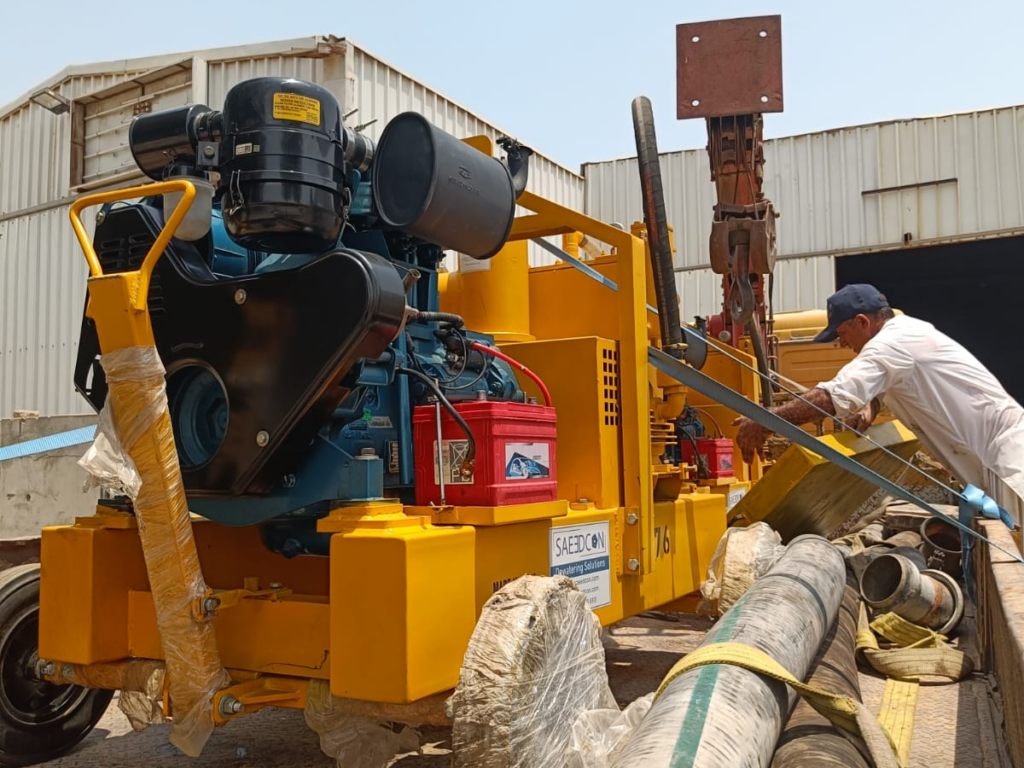
Saudi Arabia’s mega-infrastructure boom fuelled by Vision 2030, NEOM, Red Sea Project, and billions in oil & gas investment demands world-class dewatering in Saudi Arabia on every major project. Whether you’re managing a high-rise basement excavation in Riyadh, a coastal infrastructure project in Jeddah, or an industrial facility in Jubail, groundwater control is non-negotiable. This comprehensive guide covers the most effective dewatering systems, leading dewatering companies in Saudi Arabia, and how to choose the right dewatering supplier in Saudi Arabia for your project’s needs.
What Is Dewatering and Why Does It Matter in Saudi Arabia?
Dewatering is the controlled removal or lowering of groundwater to allow safe, dry construction in excavated areas. In Saudi Arabia, the significance of dewatering cannot be overstated. The Kingdom’s geology ranging from coastal sabkha formations along the Arabian Gulf and Red Sea to sandy alluvial plains in the interior creates highly variable and often challenging groundwater conditions.
Key reasons dewatering is critical to Saudi construction projects:
- Shallow water tables in coastal cities like Jeddah, Dammam, and Al Khobar
- Saline groundwater that accelerates equipment corrosion and concrete damage if unmanaged
- Vision 2030 mega-projects requiring deep basement excavations and underground infrastructure
- Flash flood events where temporary dewatering protects active sites
- Oil, gas & petrochemical plants needing continuous groundwater exclusion for safe operations
Without a proper dewatering strategy, excavations become unstable, timelines extend, and costs escalate dramatically. That’s why selecting the right dewatering system and the right dewatering supplier in Saudi Arabia is one of the most critical procurement decisions on any project.
Types of Dewatering Systems Used in Saudi Arabia
1. Well Point Dewatering System in Saudi Arabia
The well point dewatering system in Saudi Arabia is one of the most widely deployed techniques, particularly for shallow excavations and linear infrastructure projects such as pipelines, road trenches, and utility installations.
How It Works: A well point system consists of a series of small-diameter suction wells (well points) installed at regular intervals along the perimeter of an excavation. Each well point is connected by a header pipe to a centrifugal vacuum-assisted pump that draws water up from the saturated zone, effectively lowering the water table below excavation level.
Best Applications in Saudi Arabia:
- Shallow trench excavations (up to 5-6 metres depth)
- Pipeline laying across sandy coastal soils in Jeddah and the Eastern Province
- Road and infrastructure projects across Vision 2030 development corridors
- Temporary groundwater control during utility upgrades in urban areas
Advantages:
- Rapid installation and mobilisation
- Cost-effective for linear or wide-area shallow works
- Multi-stage well point systems can handle deeper applications
- Widely available through experienced dewatering companies in Saudi Arabia
Limitations: Well point systems are generally limited to a single-stage drawdown of 5-6 m. For deeper excavations, a deep well dewatering system in Saudi Arabia is required.
2. Deep Well Dewatering System in Saudi Arabia
The deep well dewatering system in Saudi Arabia is the go-to solution for large-scale, deep excavations including basement construction, tunnelling, metro works, and major civil infrastructure.
How It Works: Deep well dewatering involves the installation of large-diameter borehole wells (typically 300–600 mm diameter) fitted with high-capacity submersible pumps. These wells intercept deeper aquifer layers and pump groundwater to the surface continuously, maintaining a stable, lowered water table throughout the construction period.
Best Applications in Saudi Arabia:
- Deep basement construction in Riyadh, Jeddah CBD, and King Abdullah Financial District (KAFD)
- NEOM mega-project earthworks and infrastructure
- Desalination plant intake/outfall construction along Red Sea and Arabian Gulf coasts
- Metro and tunnel projects (Riyadh Metro extension phases)
- Petrochemical plant foundations in Jubail and Yanbu industrial cities
Advantages:
- Achieves very large drawdown depths (20–60+ metres)
- Suitable for high-yield aquifers with significant water volumes
- Reliable long-term operation for multi-year projects
- Can be combined with recharge wells to manage groundwater reinjection and environmental compliance
Limitations: Higher upfront mobilisation cost and longer installation lead time compared to well point systems, making proper project planning essential when engaging dewatering companies in Saudi Arabia.
3. Educator/Ejector Dewatering Systems
Educator systems use water under pressure to create a vacuum effect, drawing groundwater from moderate depths (up to 30–35 m). These are often selected for sites with fine silt or silty sand soils common in parts of the Eastern Province where conventional well point systems lose efficiency.
4. Sump Pumping
The simplest form of dewatering in Saudi Arabia sumps are excavated low points within the work area where water collects and is pumped out by submersible or surface pumps. Effective for minor seepage control, emergency dewatering during flash floods, and top-up dewatering on already well-controlled sites.
5. Electro-Osmosis
Used rarely in Saudi Arabia but applicable for highly cohesive, low-permeability soils (e.g., marine clays in coastal reclamation zones), electro-osmosis passes an electrical current through the soil to drive water movement toward collection points.
Key Factors When Choosing a Dewatering System in Saudi Arabia
Choosing between a well point dewatering system and a deep well dewatering system in Saudi Arabia depends on several project-specific parameters:
| Factor | Well Point System | Deep Well System |
| Excavation Depth | Up to 6 m (single stage) | 10-60+ m |
| Soil Type | Sands, gravels, coarse silts | Wide range including fissured rock |
| Flow Rate | Low-medium | Medium-very high |
| Mobilisation Speed | Fast (1–3 days) | Moderate (1–2 weeks) |
| Cost | Lower | Higher |
| Project Duration | Short–medium term | Long-term projects |
| Urban Constraints | Moderate footprint | Small surface footprint |
A qualified dewatering supplier in Saudi Arabia will conduct a full hydrogeological assessment including soil investigation reports, pumping tests, and groundwater level monitoring before recommending the optimal system.
Leading Dewatering Companies in Saudi Arabia
The Kingdom hosts a mix of international specialists and well-established local contractors delivering dewatering in Saudi Arabia across all project types. When evaluating dewatering companies in Saudi Arabia, consider the following criteria:
What to Look For in a Dewatering Contractor
- Local Presence & Equipment Inventory – Does the company maintain a dedicated equipment yard in KSA with pumps, well point sets, header pipes, generators, and instrumentation readily available?
- Saudi Aramco / SABIC Approved Vendor Status – Critical for oil, gas, and petrochemical sector projects in Jubail, Yanbu, and Ras Tanura.
- NEOM & Giga-Project Experience – Track record on Vision 2030 mega-projects signals capacity and capability.
- Hydrogeological Expertise – The best dewatering suppliers in Saudi Arabia employ specialist hydrogeologists and geotechnical engineers, not just pump operators.
- Environmental Compliance – Proper disposal and reinjection of extracted groundwater, especially saline water, is regulated under Saudi environmental guidelines.
- 24/7 Site Support – Dewatering systems must operate continuously; round-the-clock monitoring and emergency response capability is non-negotiable.
Geographic Coverage in Saudi Arabia
Top dewatering companies in Saudi Arabia typically operate across all major regions:
- Riyadh Region – High-rise construction, metro, infrastructure, road tunnels
- Makkah & Madinah – Haram expansion works, hotel and hospitality construction
- Jeddah – Coastal infrastructure, Corniche development, King Abdullah Economic City proximity
- Eastern Province (Dammam, Al Khobar, Dhahran) – Petrochemical, oil & gas, port infrastructure
- NEOM (Tabuk Region) – Mega-project civil works, linear city, SINDALAH island
- Jubail & Yanbu – Industrial city infrastructure, desalination, petrochemical plants
Dewatering Supplier in Saudi Arabia: What to Expect
A professional dewatering supplier in Saudi Arabia offers more than just pump rental. Comprehensive dewatering in Saudi Arabia typically encompasses:
- Site Investigation Support – Reviewing borehole logs, CPT data, and existing hydrogeological reports
- System Design – Engineering calculations for required drawdown, pump sizing, well spacing, and header configuration
- Equipment Supply & Installation – Full mobilisation of well points, deep wells, submersible pumps, header pipes, generator sets, and instrumentation
- Commissioning & Testing – Pump testing, flow rate verification, and drawdown monitoring to confirm system performance
- Operations & Maintenance – On-site technicians, preventive maintenance schedules, and emergency repair capability
- Demobilisation & Reinstatement – Full removal of dewatering infrastructure on project completion, with site reinstatement to agreed specifications
- Monitoring & Reporting – Regular groundwater level reporting, flow rate logs, and compliance documentation for project records
Dewatering Challenges Unique to Saudi Arabia
Experienced dewatering companies in Saudi Arabia understand the Kingdom’s unique challenges:
1. Saline & Aggressive Groundwater Coastal and sabkha formations produce highly saline, chemically aggressive water that corrodes standard pump components. Specialist suppliers use marine-grade stainless steel or HDPE well screens and corrosion-resistant pump materials.
2. Sand Pumping Risk Fine coastal sands can enter wells and cause rapid pump wear. Properly designed well screens with appropriate slot sizes and gravel pack installation prevent sand ingress a detail that separates professional dewatering suppliers in Saudi Arabia from basic pump hirers.
3. Extreme Heat Ambient temperatures regularly exceed 45°C in summer. Equipment selection, generator sizing, and cooling provisions must account for severe ambient conditions to ensure continuous operation.
4. Water Disposal & Environmental Compliance The Saudi Ministry of Environment, Water and Agriculture (MEWA) regulates the disposal of extracted groundwater. Licensed dewatering companies in Saudi Arabia will handle disposal permits, tanker arrangements, or reinjection system design as part of their scope.
5. Artesian Conditions In some areas of the Eastern Province and Riyadh Basin, artesian pressure means groundwater rises above natural ground level. This requires specialist well design with pressure control, a capability offered by leading dewatering suppliers in Saudi Arabia.
Dewatering in Saudi Arabia: Industry Applications
Construction & Real Estate
Basement car parks, foundations, underground utility corridors, and tower crane bases all require effective dewatering in Saudi Arabia. Riyadh’s booming skyline and Jeddah’s coastal development are the largest consumers of dewatering services.
Oil, Gas & Petrochemicals
Pipeline laying, tank farm construction, vessel pit excavation, and plant maintenance shutdowns at facilities operated by Saudi Aramco, SABIC, and SIPCHEM all rely on specialist dewatering companies in Saudi Arabia with approved vendor status.
Infrastructure & Transport
Road tunnels, metro extensions, airport projects, seaport construction, and desalination plant civil works are major growth areas for dewatering in Saudi Arabia under Vision 2030’s infrastructure programme.
Mining & Quarrying
Saudi Arabia’s growing mining sector particularly the Maaden phosphate and bauxite operations requires dewatering for open-pit operations and underground working areas.
Conclusion: Partner with the Right Dewatering Expert in Saudi Arabia
As Saudi Arabia accelerates its most ambitious construction and infrastructure programme in history, the demand for professional, reliable dewatering in Saudi Arabia has never been higher. Whether your project requires a well point dewatering system in Saudi Arabia for rapid pipeline works, a deep well dewatering system in Saudi Arabia for a landmark tower’s basement, or comprehensive ground-water management across a NEOM giga-project site, choosing the right dewatering companies in Saudi Arabia and experienced dewatering supplier in Saudi Arabia is the foundation of your project’s success.
Engage early, invest in proper hydrogeological investigation, and partner with a dewatering specialist who understands the Kingdom’s unique ground conditions, regulatory environment, and the relentless pace of Vision 2030 delivery.
Looking for a trusted dewatering supplier in Saudi Arabia? Contact our team today for a free site assessment and system recommendation tailored to your project.
Frequently Added Questions
The well point dewatering system and deep well dewatering system are the two most widely used methods in Saudi Arabia. Well point systems suit shallow trenches and pipeline works, while deep well systems are preferred for large basement excavations and mega-project infrastructure.
The choice depends primarily on excavation depth, soil type, and required flow rate. For depths under 6 metres, a well point dewatering system in Saudi Arabia is typically more cost-effective. For deeper works or high-volume aquifers, a deep well dewatering system in Saudi Arabia is the engineered solution.
Yes. Reputable dewatering companies in Saudi Arabia hold relevant Saudi Aramco, SABIC, and Royal Commission for Jubail and Yanbu (RCJY) approved vendor registrations, along with Saudi Contractors Authority (SCA) classification. Always verify credentials before awarding a contract.
Costs vary significantly based on system type, project scale, duration, soil conditions, and disposal requirements. A basic well point system for a short-duration trench project may cost SAR 15,000–50,000, while a comprehensive deep well system for a multi-year mega-project can run into millions of SAR. Engage a qualified dewatering supplier in Saudi Arabia for a project-specific quotation.
Poorly designed dewatering can cause ground settlement that damages nearby structures — a critical concern in dense urban areas like central Riyadh or old Jeddah. Professional dewatering companies in Saudi Arabia design systems with settlement monitoring, controlled drawdown rates, and recharge wells where necessary.
Well point systems can be installed and operational in 1–3 days. Deep well dewatering systems typically require 1–3 weeks depending on the number of wells and ground conditions. Always allow sufficient lead time when planning your project programme.
Yes. Most professional dewatering suppliers in Saudi Arabia offer both full-service dewatering contracts (design, install, operate, maintain) and equipment rental with operator support, depending on client preference and in-house capability.
The Ministry of Environment, Water and Agriculture (MEWA) and the National Centre for Environmental Compliance regulate groundwater extraction and disposal. Projects near protected areas, coastlines, or NEOM zones may require environmental impact assessments. A reputable dewatering supplier in Saudi Arabia will guide you through compliance requirements.