
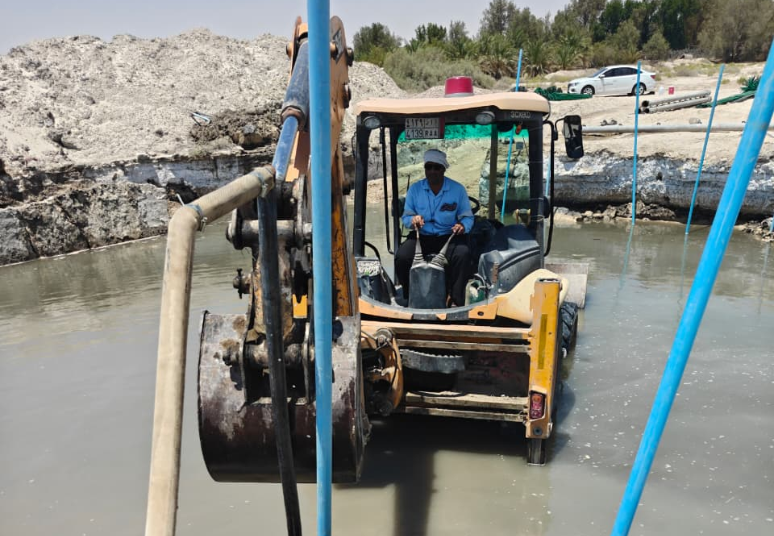
Pipeline installation moves along a route through excavation, bedding preparation, pipe laying and backfilling. The groundwater-control arrangement needs to support that sequence as the working area advances.
Effective pipeline trench dewatering starts with a coordinated plan for the active excavation, the next section and the completed work awaiting release. It should identify where a dewatering pump is needed, how performance will be checked and when equipment can be relocated.
For contractors working in Jubail, Dammam and across Saudi Arabia, these decisions belong in the construction programme before excavation starts.
1. Review Ground Conditions Along the Pipeline Route
Start with the latest alignment drawings, geotechnical reports and groundwater information. Identify changes in excavation depth, ground conditions and access along the route.
Record the requirements for each planned section, including:
- Trench depth and pipe invert level.
- Available groundwater readings and soil information.
- Manholes, chambers, crossings and deeper excavations.
- Existing buried services and nearby structures.
- Equipment access and available working space.
Where investigation information is incomplete, ask the designer whether further assessment or testing is needed. Groundwater-control requirements should reflect the conditions expected in each section.
2. Select a Dewatering Method for the Excavation Design
The approach to pipeline trench dewatering should follow the groundwater assessment, excavation geometry and temporary-works design.
| Method | Where it may be considered | Main planning consideration |
| Wellpoint dewatering | Suitable shallow pipeline and utility excavations | Layout, installation method and achievable drawdown |
| Deep well dewatering | Deeper excavations or conditions requiring an alternative well arrangement | Groundwater response, well depth and pumping duty |
| Sump pumping | Local water collection where soil and excavation conditions permit | Ground stability, filtration and protection against soil loss |
Wellpoints may be arranged along one or both sides of a trench. Additional tiers may be needed as excavation depth increases. The design should distinguish these depth-related stages from the sections used to advance along the route.
Avoid applying a fixed well spacing or pumping capacity to every section without design review.
3. Install and Verify the System Before Opening the Section
Coordinate the installation with buried-service checks, access arrangements and the planned excavation-support system.
For a wellpoint arrangement, this includes installing the wellpoints, connecting the header and pump, and checking the complete system. Confirm the discharge route and power or fuel arrangements before the planned pumping period.
The project team should verify that groundwater levels or pressures meet the specified design targets before advancing the excavation. Monitoring points help establish conditions beyond the pump itself.
Trench support, inspection and access requirements remain part of the excavation plan. A visibly dry surface alone does not establish that a trench is safe to enter.
4. Maintain Control During Bedding and Pipe Installation
Keep the groundwater-control arrangement operating according to the agreed method while the trench formation is prepared and pipe installation proceeds.
Coordinate pump checks with excavation, bedding inspections, pipe lowering and jointing activities. Protect headers, monitoring points and discharge lines from vehicle movements and lifting operations.
Maintain records of groundwater readings, pump operation and relevant changes in discharge. Groundwater-level instruments, flowmeters and pump-status sensors can support this monitoring.
Unexpected inflow, soil movement or changes in water clarity should be handled through the response arrangements defined by the project engineer. Obtain technical review before making unplanned changes to the pumping layout or excavation sequence.
5. Prepare the Next Section Before Transferring Equipment
Pipeline trench dewatering needs a planned handover as the working area advances. Identify what must remain operational in the current section and what must be ready in the next.
The programme should confirm:
- The approved length and sequence of excavation sections.
- Access for installing the next groundwater-control arrangement.
- The monitoring needed to verify its performance.
- The release conditions for equipment serving completed work.
- Responsibilities during pump or header relocation.
Depending on the design, completed and upcoming sections may require pumping at the same time. Allow for that possibility when agreeing equipment quantities and rental periods.
Also assess whether permeable pipe bedding or backfill could provide a water pathway from completed work into the active excavation. Any required barriers should be designed for the actual conditions.
6. Coordinate Backfilling and Groundwater Recovery
Agree the pumping shutdown criteria with the project engineer as part of the installation plan.
The review should consider pipe support, completed embedment and backfill, temporary-works removal and the groundwater conditions expected after pumping ends. Depending on the pipe and site conditions, buoyancy may also require assessment.
An empty pipe can be vulnerable to flotation where groundwater rises around it and the available restraint is insufficient. The pipe designer should confirm the relevant cover or restraint requirements using the applicable manufacturer guidance.
Follow the agreed shutdown sequence and any required recovery monitoring before removing the dewatering equipment.
Keep Discharge and Operational Support in the Plan
As pumps move, check whether the discharge route, hose length or elevation has changed. These changes can affect the total dynamic head and the flow delivered by the pump.
Confirm the receiving point, applicable permissions, water-quality requirements and any treatment arrangements with the project team and relevant authority. Identify who will inspect discharge lines and maintain treatment equipment where required.
Agree maintenance access, fuel or power provision, emergency contacts and standby arrangements appropriate to the assessed risk. Include these responsibilities in shift handovers so the active excavation continues to receive the planned support.
Practical Checklist for Each Trench Section
| Stage | Confirmation needed |
| Route assessment | Ground information, excavation levels, services and access reviewed |
| System design | Method and layout coordinated with excavation support |
| Before excavation | Installation checked and design groundwater targets verified |
| Pipe installation | Monitoring, inspections and equipment protection maintained |
| Section handover | Next arrangement ready and existing equipment cleared for transfer |
| Backfilling and shutdown | Support, buoyancy, recovery and removal requirements reviewed |
Plan Your Pipeline Project with Saeedcon
Saeedcon Dewatering Solutions provides wellpoint and deep well systems, groundwater monitoring support, and dewatering pumps for rental and purchase in Saudi Arabia. Saeedcon
For pipeline trench dewatering enquiries, share the route drawings, excavation depths, available ground investigation reports, proposed working sections and project duration. Include details of chambers, crossings, discharge routes and available power.
Contact Saeedcon to discuss your pipeline project’s groundwater-control requirements and request a quotation based on the planned construction sequence.
Frequently Added Questions:
Is wellpoint dewatering suitable for pipeline trenches?
It is commonly considered for suitable shallow pipeline excavations. Suitability depends on ground conditions, groundwater response, required drawdown and the installation layout. Deeper sections may need a different arrangement.
Can the same pumps be moved along the pipeline route?
Equipment can be relocated where the approved construction sequence allows it. Confirm that the completed section can be released and the next section has the required groundwater control before transferring equipment.
Can sump pumping be used on its own?
It may be suitable where the ground and excavation design permit controlled local collection. The specialist should assess ground stability, filtration and potential soil loss before selecting the method.
When can pumping stop after the pipe is installed?
The project engineer should confirm the release point. Relevant checks include pipe support, embedment and backfill, flotation resistance, remaining temporary works and expected groundwater recovery.